
What is Vibe Coding and why is everyone talking about it

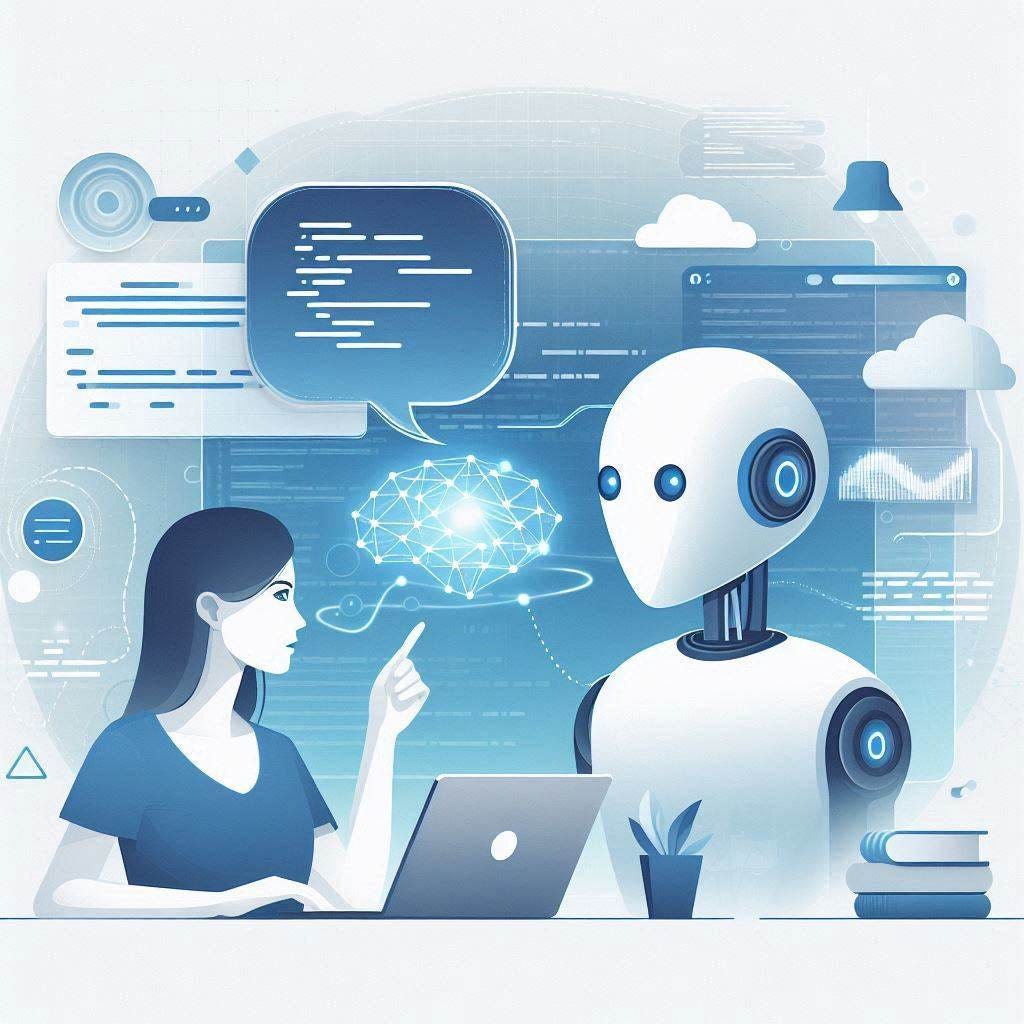
Imagine creating an entire app just by describing what you want in natural language, and watching the code take shape before your eyes — without manually writing a single line.
Sounds like magic? That’s vibe coding.
But is this new trend just hype, or a real revolution in how we develop software?
What is Vibe Coding?
Vibe coding is a term coined by Andrej Karpathy (former OpenAI and Tesla) to describe a development approach where generative AI — especially large language models (LLMs) like ChatGPT, Claude, or GitHub Copilot — takes the lead in producing code based on natural language descriptions.

The practice gained traction in 2025, driven by its ability to speed up the development cycle and democratize access to software creation, even for non-programmers.
Concept
Vibe coding shifts the focus from traditional coding, based on manually writing instructions, to a more declarative and iterative interaction model: the developer acts as an orchestrator, expressing intentions and constraints in natural language, while the model generates functional implementations.
This approach is distinct from using AI as a copilot, as it eliminates the need for deep involvement with every line of code.
It’s essential to distinguish between coding (translating logic into machine instructions) and programming (the broader practice involving architecture, design, problem-solving, and maintenance).
Vibe coding automates the former but demands critical oversight in the latter.
How does it work?
The basic workflow of vibe coding can be described as follows:
The user describes requirements or features in natural language
The AI translates that description into executable code
The human reviews, adjusts, and tests the generated output
The cycle repeats as needed, based on errors or scope changes
This dynamic transforms the developer into a reviewer and strategist, while the AI acts as an automated generation interface based on prompt engineering.
Operational Advantages
Productivity: speeds up the generation of repetitive or boilerplate code
Prototyping: enables MVPs within extremely short timeframes
Accessibility: allows people without syntax expertise to create functional solutions
Experimentation: facilitates rapid testing of ideas and alternative approaches
Risks and Limitations
Despite productivity gains, vibe coding presents significant technical challenges:
Opacity: the generated code may be functional but incomprehensible to its recipients
Compromised maintainability: lack of real understanding makes debugging, refactoring, and evolution harder
Vulnerabilities: AI may introduce security flaws or violations of best practices
Excessive dependency: relying solely on AI undermines the development and retention of fundamental software engineering skills
Real-world cases have shown that products developed exclusively through vibe coding, without proper technical validation, often collapse when exposed to real users, requiring rework or total abandonment.
How to Do Vibe Coding the Right Way
If you want to harness its benefits without major risks, follow these principles:
1️⃣ Use popular and well-supported stacks
LLMs work better with well-documented and widely-used technologies, such as:
Frontend: React, Vue, Angular
Backend: Node.js, Django, Flask, Laravel
Data Science: Pandas, Scikit-learn, TensorFlow, PyTorch
Avoid obscure frameworks or custom architectures.
2️⃣ Master Git
AI may overwrite or delete working code, so version control is a must:
Make small, frequent commits
Use clear messages
Experiment in separate branches before merging
3️⃣ Be specific in your prompts
Vague prompts yield inconsistent results — specificity is key. Vibe coding demands detailed instructions:
Break tasks into small steps
Give clear examples (few-shot prompting)
Provide context: data structures, APIs, expected formats, constraints (“use functional components,” “don’t use external libraries”)
4️⃣ Test and review everything
The generated code should be treated as a draft. AI doesn’t understand semantics or business context. Unit testing, manual verification, and line-by-line review are mandatory — especially for production-grade applications.
Understand what each line does before using it
Write automated tests and manually verify edge-case behavior
Treat AI code as a draft, not a final product
When to Use Vibe Coding
Scenarios where vibe coding is useful:
Building MVPs or prototypes
Quickly exploring new ideas
Multidisciplinary teams with non-programmers
Avoid it in:
Critical or sensitive systems
Regulated environments (e.g., finance, healthcare) or those with high security, performance, and maintenance requirements
Teams unable to review or understand the code
Software with high degrees of customization and technical coupling
Conclusion
Vibe coding doesn’t replace software engineering, but it can enhance its efficiency when used responsibly.
It’s a powerful approach to accelerate delivery, reduce technical barriers, and democratize development. Its adoption, however, requires technical rigor, critical capacity, and a clear understanding of its limits.
Use AI as a copilot, not an autopilot.
The future of development is not in rejecting or fully outsourcing coding to AI, but in integrating it into the workflow with awareness and responsibility.